INSIDE 1:1 MENTORING
How to Launch Nationwide With Five People
A composite client example, not a client story.
Three people are waiting on your answer, and the launch only you can steer sits untouched. Ivanka Menken uses the Fortnight Loop inside 1:1 Mentoring, a 6-month programme at AUD $1,500 per month ex GST, to run a national retail push one pitch a fortnight, with one named owner and a review before the next retailer. The case is a composite five-person brand.
The Fortnight Loop is the rhythm of the programme, not a separate product.
AN EXAMPLE LAUNCH
One pitch a fortnight. One owner. A review before the next.
- THE TEAMone founder, four who can own a buyer5 people
- THE SEQUENCEten fortnights, one pitch at a time5 months
- EACH FORTNIGHTand a written review before the next1 owner
THE RULE
“Name the next pitch and its owner. Answer only what the rule sends you.”
A composite example, not a client result. Your sequence will differ.
SOUND FAMILIAR?
Every retailer is urgent, and every answer is yours
- 01Your team brings every retail request to you for a same-day answer.
- 02Buyer calls wait until you can join them.
- 03Every retailer looks equally urgent, so the best one waits.
THE LAUNCH, AS IT STANDS
- Retailers in play: all of them, at once
- Who owns each buyer: the founder
- The plan: email threads and a spreadsheet
- Review: when something goes wrong
- The team: five people, waiting on one
An example. Five people busy, one person deciding.
THE EXAMPLE CASE
One retail push, read three ways
A composite client example, not a client story.
01
THE CLIENT AND THE MOMENT
Three buyer replies on the same day
The founder of a five-person consumer products brand was preparing a first national retail push. Buyers had shown interest. Every conversation still ran through the founder, and the launch plan lived across email threads and a spreadsheet. Each week the team waited on answers, and the work only the founder could do sat untouched. The founder came for help when three buyer replies arrived on the same day and nobody else could answer any of them.
02
WHAT THEY HAD TRIED
Chasing every retailer at once
The obvious fix was to chase every retailer at once and let volume do the work. It did not. With no owner for each buyer and no review rhythm, every reply came back to the founder anyway. The team was busy, the founder was busier, and no retailer got the full attention a first order needs.
03
WHAT IVANKA NOTICED
Every retailer was treated as equally urgent
Ivanka noticed the team was treating every retailer as equally urgent. Five people were split across low-fit buyer calls, while the strongest launch window had not been reviewed at all. The urgency was real. The order was missing.
THE DIAGNOSIS AND THE INSIGHT
Pitch sequencing, not sales capacity
It looked like a capacity problem: five people, too many buyers. The real issue was pitch sequencing. The founder needed a fortnightly decision loop that separated the next best retail move from every incoming request.
The bottleneck is rarely capacity. It is the unwritten rule about who is allowed to decide. Once each pitch has a written owner and a review date, the team stops waiting for the founder, and the founder stops answering on the same day.
The bottleneck is rarely capacity. It is the unwritten rule about who is allowed to decide.
THE COST OF STAYING STUCK
Stay stuck, and every week the decision stays with you, the team waits, and you pay in hours and momentum. The best retail window passes while the low-fit calls get answered.
THE TOOL
The Fortnight Loop, for a retail launch
The Fortnight Loop is the rhythm of 1:1 Mentoring: the one thing, the numbers, the story, and one written commitment, every fortnight. For a retail launch, the one thing is the next pitch, and the commitment names its owner, its date and what still comes back to the founder.
An example launch. Tap a part. Your retailers and your owners are yours.
Fortnight Loop, for a retail launch · a framework by Ivanka Menken
What it is
It is the four steps of every session, worked as a launch sequence. Each fortnight carries one pitch decision, one owner, one date and the evidence from the last buyer. The next retailer is added only after a written review.
What it replaces
It replaces chasing every retailer at once, the launch plan scattered across email threads, and the same-day answer the founder gives to every request.
It sits at the centre of 1:1 Mentoring, with the monthly scorecard beside it. Ivanka does not run the launch or pitch the buyers. There is no separate checkout.
THE LOOP, FOR ONE LAUNCH
- 01The one thing: the next pitch, chosen from the list
- 02The owner: one named person on the team
- 03The date: the buyer conversation, on the calendar
- 04The evidence: what the last buyer said or ordered
- 05What still comes to the founder: written, short and specific
- 06The review: written before the next retailer is added
HOW IVANKA WORKED WITH THEM
Start from last week's real requests
In the example session, Ivanka starts with last week's real requests: who asked, what they asked and what could have waited. She writes which retail decisions a named team member owns, what still comes to the founder, and when the founder reviews the result. They test the rule against two recent buyer requests. The founder leaves with one written handover, the next pitch in the sequence, and a review date.
THE HANDOVER, AS WRITTEN IN THE SESSION
- Last week's requests
- Who asked, what they asked, and what could have waited.
- The next pitch
- One retailer, chosen as the next best move.
- The owner
- One named team member, running the buyer conversation.
- What still comes to you
- A short written list. Tested on two recent requests.
- Review
- 14 days out
A composite example. Your rule is yours.
THE FOUR-STEP LOOP
- 1The one thingThe next pitch in the launch sequence.
- 2The numbersLast week's requests, and what the last buyer said or ordered.
- 3The storyWhy every retailer feels like it cannot wait.
- 4The commitmentOne owner, one date, and a written review before the next.
THE QUESTIONS
- Who brought you a retail request last week, and what was it?
- Which of those could have waited, or been answered by someone else?
- Which retailer is the next best move, and why that one?
- Who on the team owns that buyer conversation?
- What still comes to you, and when do you review the result?
Before the next session, the named owner runs the buyer conversation without the founder in the room, and the founder answers only what the rule says still comes to them.
WHAT CHANGED
One pitch a fortnight, with an owner
By month 6, the launch runs on a written sequence, not on the founder's inbox.
NOW
- Every retailer chased at once.
- Every buyer conversation runs through the founder.
- The plan lives in email threads and a spreadsheet.
- The strongest launch window goes unreviewed.
BY MONTH 6
- A written five-month launch sequence, one pitch each fortnight.
- One decision with a named team member, kept there for 14 days.
- A short written list of what still comes to the founder.
- Each review records what stayed with the owner and what came back.
THE 12 FORTNIGHTS
- 1Call
- 2Call
- 3Call
- 4Call
- 5Call
- 6Month 3
- 7Call
- 8Call
- 9Call
- 10Call
- 11Call
- 12Month 6
The programme is the container: 12 fortnightly 60-minute sessions, a monthly scorecard, and reviews at month 3 and month 6.
ILLUSTRATIVE RESULT
In this composite example, the founder cut the pitch list to a five-month sequence, assigned one buyer conversation per fortnight, and wrote a review before adding the next retailer. The team stopped bringing every retail request to the founder for a same-day answer. Illustrative, not a client result.
WHAT THIS MEANS FOR YOU
The next retailer is a sequencing decision
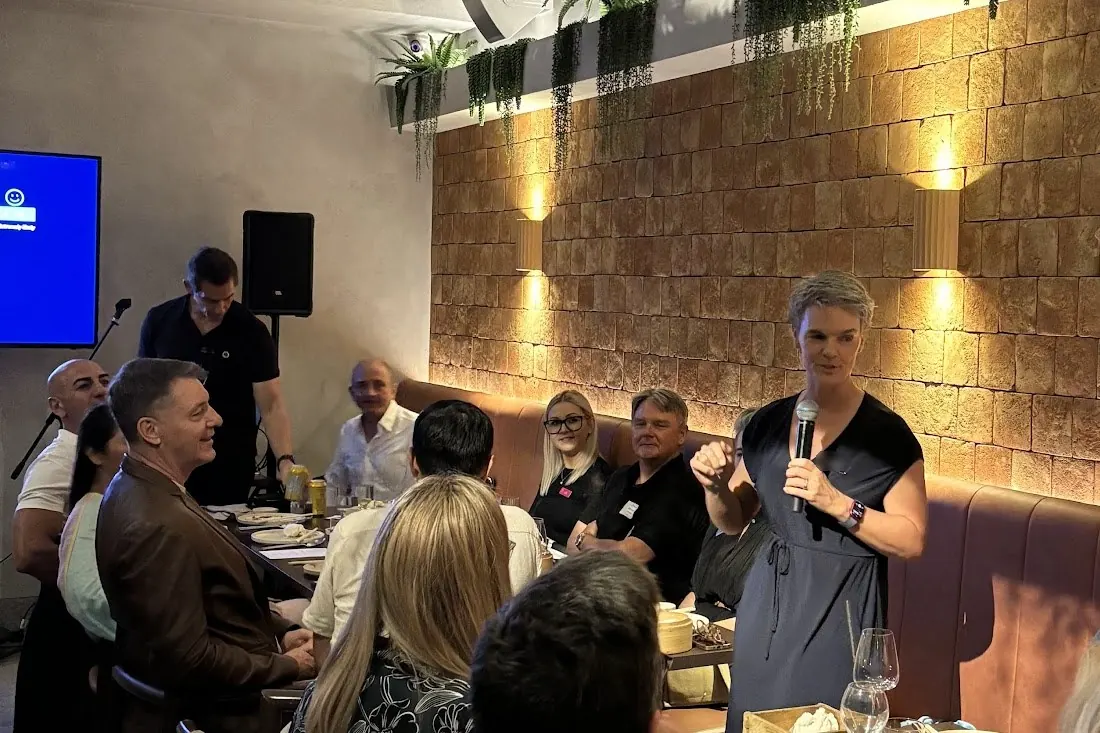
Ivanka Menken built 1:1 Mentoring for founders of $500K to $3M businesses, and every session runs on the Fortnight Loop. She asks which decision is really yours, and holds you to the one you write down.
If buyers are interested and every answer still has to come from you, the decision in front of you is the next pitch and who owns it. Write both down before you answer the next request.
“During our sessions Ivanka isn’t just talking theory. She is sharing her own lived experiences.”
Business owner
WHO IT IS FOR
It fits
- You run a $500K to $3M product business with a small team.
- Retail buyers are interested, and every conversation runs through you.
- Your team waits on your answer before it can move.
- You will name one owner and one pitch for the next fortnight.
It does not fit
- You want a done-for-you retail launch or someone to pitch buyers for you.
- You want accounting or financial advice.
- You want a delivery team rather than coaching.
- You are not ready to stay out of one buyer conversation.
THE INVESTMENT
AUD $1,500
per month ex GST
6 months · 12 fortnightly sessions
It is part of 1:1 Mentoring, a 6-month programme at AUD $1,500 per month ex GST, not sold separately.
- 12 fortnightly 60-minute sessions
- A monthly one-page scorecard
- Reviews at month 3 and month 6
- The Fortnight Loop for the launch sequence
Three founding places in total, shared across 1:1 Mentoring and its three focus programmes, are available at A$1,000 a month, in return for honest monthly feedback and a testimonial, which can be anonymous. Claim a founding place.
The Fortnight Loop is part of the programme. It is not sold separately.
FREQUENTLY ASKED
Questions about launching with a small team
Which decisions can go first?
The ones your team already brings to you every week and could answer with a written rule: buyer follow-ups, samples, meeting times, routine order questions. Start with one. Ivanka Menken picks it with you from last week's real requests inside 1:1 Mentoring, a programme that runs 6 months at AUD $1,500 per month ex GST.
How do I know the leader is ready?
You do not need certainty, you need a test. Give one buyer conversation to the person closest to it, write what they own and what still comes to you, and review it after 14 days. Ivanka Menken sets that test with you in 1:1 Mentoring, 6 months at AUD $1,500 per month ex GST.
What still escalates?
Only what the written rule names, such as a price below the level you agreed, exclusivity, a long contract or a buyer outside the sequence. Everything else stays with the owner until the review. Ivanka Menken writes that short list with you inside 1:1 Mentoring, which runs 6 months at AUD $1,500 per month ex GST.
What happens if it comes back?
Then the review shows why: a missing rule, a missing piece of evidence, or an override. You write down what came back instead of taking the decision back, and the next session rewrites the rule. Ivanka Menken works it through with you in 1:1 Mentoring, 6 months at AUD $1,500 per month ex GST.
Name the next pitch and its owner
If buyers are interested and every answer still has to come from you, start with 1:1 Mentoring. The Fortnight Loop is the rhythm of it, and the 20-minute intro call is where you can see whether the programme fits.
Not a done-for-you retail launch, accounting or financial advice.