INSIDE CLARITY SHIFT MASTERMIND
Price the Fix Against Revenue at Risk
A composite client example.
You are quoted $10,000 to fix a revenue leak and cannot tell whether that is large or small for your business. Ivanka Menken uses the Revenue-Source Impact Test inside Clarity Shift Mastermind, a 10-month peer group at AUD $2,000 per month ex GST. You turn the share of revenue that depends on one source into dollars, then judge the fix against what it protects. In a composite example, $300,000 of $1m revenue came from one search channel. You leave with an impact note and one anchor decision.
The Revenue-Source Impact Test is a tool inside the programme, not a separate product.
AN EXAMPLE TEST
One source. One number. One fix.
- TOTAL REVENUEa year, the whole business$1m
- FROM ONE SOURCEa year, the exposure$300,000
- THE FIXjudged against the $300,000$10,000
THE RULE
“Judge a fix against the revenue it protects, not the hours it takes.”
A composite example, not a client result. Your numbers will differ.
SOUND FAMILIAR?
A quote with nothing to compare it to
- 01You cannot tell how much revenue depends on one source.
- 02A fix is quoted and you have no way to judge whether it is material.
- 03You compare the cost with the wrong number, such as the marketing budget.
THE DECISION, AS IT STANDS
- Total revenue: about $1m a year
- Revenue from the one source: not worked out
- The quote: $10,000
- Compared against: the marketing budget
- Decision: left for another month
A composite example. A quote with the wrong number beside it.
THE EXAMPLE CASE
One business, one source it relies on
A composite client example.
01
THE MOMENT
A $10,000 quote, and nothing to compare it to
The quote arrives on Thursday: $10,000 to fix the problem that has cut enquiries from search for two months. It feels like a lot. You open the dashboard and it shows total revenue, about $1m a year, and nothing about how much of that arrives through the one channel that is leaking. You put the quote beside this year’s marketing budget, it looks expensive, and you leave it for another month.
02
WHAT THEY HAD TRIED
Compare it with the marketing budget
The obvious move was to put the quote beside the marketing budget. Against that number, $10,000 looked like a large share of the year’s spend, so the decision stalled. But the marketing budget says what you spend, not what you stand to lose. Every month the leak stayed open, enquiries from that source kept falling, and the comparison never showed it.
03
WHAT IVANKA NOTICED
The founder knew the source but not the dollars
Ivanka noticed the founder could say, without checking, that most new customers found the business through search. What they had never done was turn that share into a dollar figure. They knew the dependency as a feeling. Until it was a number, there was nothing to weigh the quote against, so every option looked either expensive or risky.
THE DIAGNOSIS
Not the cost of the fix. The exposure it protects.
The diagnosis was not that the fix was overpriced. The real question was not what the fix cost but how much revenue exposure it protected. The decision needed a revenue-source impact test before it needed another quote.
The reframe: the size of a fix is easier to judge when it is measured against the revenue it protects, not the hours it takes. If $300,000 of $1m comes from one source, a $10,000 fix is about 3% of that exposure. Put that way, the room can argue about the right thing: whether the fix protects the source, not whether $10,000 feels like a lot.
The size of a fix is easier to judge against the revenue it protects than the hours it takes.
THE COST OF STAYING STUCK
Staying stuck means you cannot tell whether a $10,000 fix is material against $300,000 of revenue from one source. The leak keeps running while the quote waits.
THE TOOL
The Revenue-Source Impact Test, for one fix
The Revenue-Source Impact Test turns dependence on one revenue source into a dollar exposure before anyone talks about the price of a fix. Three numbers go on one page: total revenue, the share from the one source, and that share in dollars. The cost of the fix is then read against the exposure, and the room tests the decision.
A composite example. Tap a part. Your source and numbers are yours.
Revenue-Source Impact Test · a framework by Ivanka Menken
What it is
It is a one-page impact note. Total revenue, the share from one source as a percentage and in dollars, the cost of the fix as a share of that exposure, what the fix actually protects, and one anchor decision written for the room.
What it replaces
It replaces a quote compared with the marketing budget, a dependency known only as a feeling, and a decision left for another month while the leak keeps running.
It sits inside Clarity Shift Mastermind, before the room discusses a fix. You bring the impact note to the Anchor Seat and seven other founders test the decision. It is a peer group, not accounting or financial advice, and there is no separate checkout.
THE NOTE, FOR ONE FIX
- 01Total revenue: $1m a year in the example
- 02The share from one source: 30%, from search
- 03The exposure: $300,000 a year
- 04The fix: $10,000, about 3% of the exposure
- 05What it protects: the source, not the hours
- 06The anchor decision: one written commitment for the room
HOW IVANKA WORKED WITH THEM
The impact note, before the room
Before the room discussed the fix, Ivanka asked three questions. What share of revenue comes from this one source? What is that share in dollars? What does the fix protect? The founder worked the numbers on one page: $300,000 of $1m, and a $10,000 quote against it. In the group session, the founder took the Anchor Seat with the impact note, the room tested what the fix protected, and the founder wrote one anchor decision before leaving.
THE IMPACT NOTE, AS WRITTEN
- The source share
- 30% of revenue, from one search channel.
- The dollar exposure
- $300,000 a year, out of $1m.
- The fix against it
- $10,000, about 3% of the exposure it protects.
- The anchor decision
- Approve the fix and track enquiries from that source monthly.
- Review
- At the next 1:1 check-in
A composite example. Your source and numbers are yours.
IN THE ROOM
- 1The noteTotal revenue, one source, the exposure.
- 2The seatThe founder brings it to the Anchor Seat.
- 3The testThe room asks what the fix protects.
- 4The decisionOne anchor decision, written before leaving.
THE QUESTIONS
- What share of revenue comes from this one source?
- What is that share in dollars, a year?
- What does the fix protect?
- What would you do if the source stopped tomorrow?
- What will you decide before the next session?
Before the next session, the founder acted on the anchor decision and brought the next month’s enquiries from that source to the 1:1 check-in.
WHAT CHANGED
A dependency with a dollar figure
By month 6, one revenue-source dependency is quantified in dollars, the cost of a fix is compared with that exposure, and the anchor decision has been brought to the room with one written commitment.
BEFORE
- Total revenue was the only number.
- The quote sat beside the marketing budget.
- The dependency was a feeling.
- The decision waited a month at a time.
BY MONTH 6
- One dependency written in dollars.
- A fix judged against the exposure it protects.
- The decision tested by seven other founders.
- One written commitment, reviewed in the room.
THE 10 MONTHS
- 1Room
- 2Room + 1:1
- 3Room + 1:1
- 4Room
- 5Room + 1:1
- 6Room + 1:1
- 7Room
- 8Room + 1:1
- 9Room + 1:1
- 10Room
The container: 10 months of monthly two-hour group sessions with eight founders, plus two 1:1 check-ins each quarter.
ILLUSTRATIVE RESULT
In this composite example, the founder wrote down the source share as a dollar exposure, compared the cost of the fix with the revenue it protected, and made one anchor decision in the room. The change was in how the decision was made, not a claim about revenue recovered. Illustrative, not a client result.
WHAT THIS MEANS FOR YOU
Put the dollar figure on the dependency
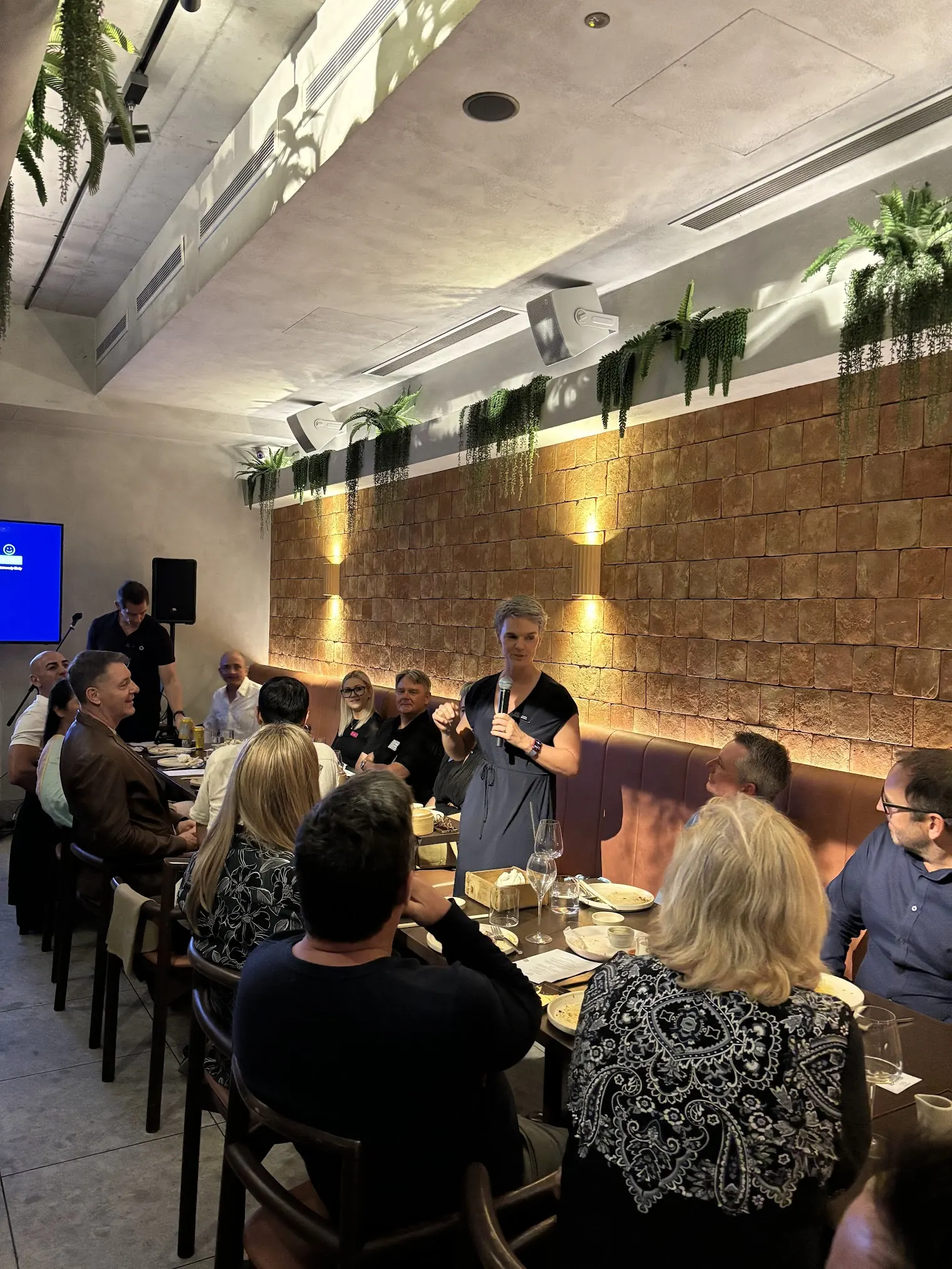
Ivanka Menken chairs Clarity Shift Mastermind: eight vetted founders of A$1M to A$10M businesses, one room, ten months. She asks the question the dashboard does not, and keeps the room on the decision rather than the feeling.
This fits if a meaningful share of your revenue arrives through one source and a fix is waiting on your desk. It does not fit if you want a course or someone to make the fix for you. The decision in front of you is the dollar figure. Work it out before you compare the quote with anything else.
“Helps founders lead with clarity and integrity by modelling vulnerability, emotional intelligence, and grounded decision-making. Creates an environment where leaders can openly explore challenges and grow without fear of judgement.”
R.W., founder
WHO IT IS FOR
It fits
- You run an A$1M to A$10M business.
- A large share of revenue comes through one source.
- A fix is quoted and you cannot judge it.
- You will bring the numbers to a room that will test them.
It does not fit
- You want a course or a masterclass.
- You want a done-for-you fix or an agency.
- You want accounting or financial advice.
- Your revenue is spread evenly with no single source.
THE INVESTMENT
AUD $2,000
per month ex GST
10 months · 10 monthly group sessions
The Revenue-Source Impact Test is part of Clarity Shift Mastermind, a 10-month peer programme at AUD $2,000 per month ex GST. It is not sold separately.
- 10 monthly two-hour group sessions
- Two 1:1 check-ins each quarter
- The five-number scorecard shared each month
- The Revenue-Source Impact Test before any fix is priced
The Revenue-Source Impact Test is part of the programme. It is not sold separately.
FREQUENTLY ASKED
Questions about revenue source dependency
How do I measure revenue from one source?
Take the last 12 months and tag each customer or sale by where it first came from. Add up the source you depend on and divide it by total revenue. Then write that share in dollars, because a dollar figure is what the fix gets judged against. Ivanka Menken works this through inside Clarity Shift Mastermind, 10 months at AUD $2,000 per month ex GST.
What should I compare a fix cost against?
Against the revenue the fix protects, not the marketing budget or the hours it takes. In the example, a $10,000 fix is judged against $300,000 of revenue from one source, about 3% of the exposure. Ivanka Menken asks the room to test that comparison inside Clarity Shift Mastermind, 10 months at AUD $2,000 per month ex GST. It is not financial advice.
How does the revenue-source impact test work inside Clarity Shift Mastermind?
You write the impact note before the group session: total revenue, the share from one source and the exposure in dollars. In the room, you take the Anchor Seat and seven founders test what the fix protects. You leave with one anchor decision. Ivanka Menken chairs it inside Clarity Shift Mastermind, 10 months at AUD $2,000 per month ex GST.
Can this help if my revenue does not come from search?
Yes. The source can be anything a large share of revenue depends on: one big client, one marketplace, one referral partner, one event a year. The test is the same: share, dollars, then the fix against the exposure. Ivanka Menken runs it with any source inside Clarity Shift Mastermind, 10 months at AUD $2,000 per month ex GST.
Write the exposure before you decide
If a fix is waiting and you cannot tell whether it is material, apply for Clarity Shift Mastermind. The Revenue-Source Impact Test is inside it, and the 20-minute intro call is where you can see whether the room fits.
Not a course, a masterclass or a done-for-you fix.